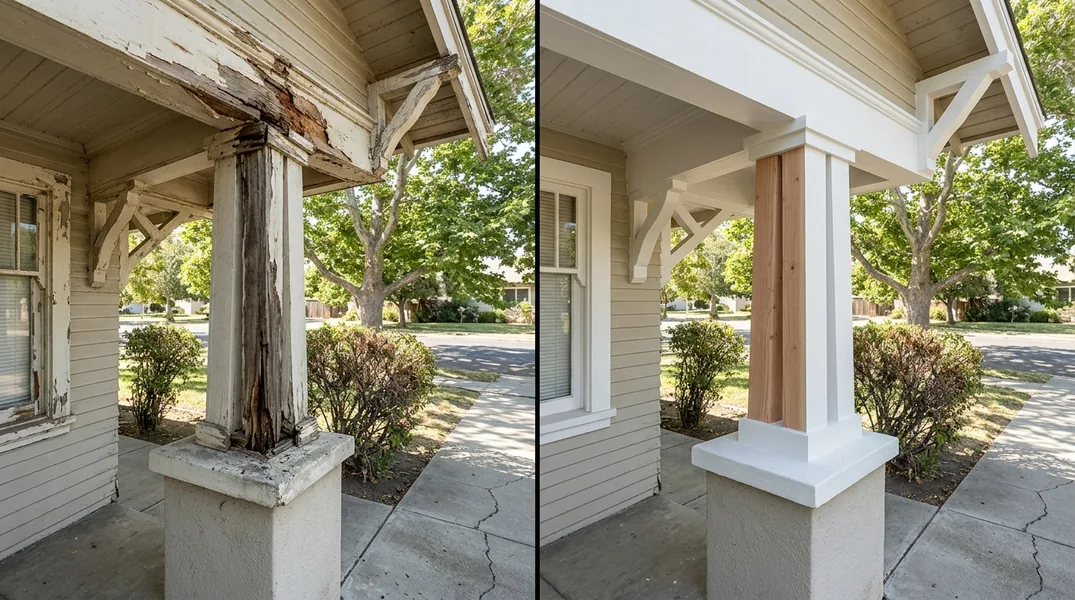
Why Graceada Park and Enslen Park Homes Demand Special Attention
If you own a home in Modesto's charming Graceada Park or Enslen Park neighborhoods, you already know you live in something special. These historic districts showcase some of the region's most beautiful craftsman bungalows and Spanish Revival residences, many built in the early 1900s. But that architectural charm comes with a responsibility: these older homes require a different maintenance approach than modern construction.
The wood framing, siding, and structural elements in homes built a century ago were crafted with materials and techniques that are fundamentally different from today's standards. While that craftsmanship is part of what makes these neighborhoods so desirable, it also means these homes are more vulnerable to wood deterioration, moisture intrusion, and structural issues. The good news is that with proper care and timely intervention, your historic home can remain beautiful and structurally sound for generations to come.
Understanding Wood Rot in Historic Homes
Wood Rot & Dry Rot Repair is one of the most common issues affecting older homes in Modesto neighborhoods. Dry rot and wet rot develop when wood is exposed to moisture over extended periods, creating an environment where fungal spores thrive. In historic homes, this often starts in areas that are difficult to see or access: behind exterior siding, under eaves, in crawl spaces, or within wall cavities where moisture has accumulated over decades.
The challenge with wood rot in craftsman bungalows and Spanish Revival homes is that it often progresses silently. By the time you notice soft wood, discoloration, or a musty smell, the damage may have spread significantly. This is why regular inspections are critical. Look for signs like paint bubbling or peeling on exterior wood, soft spots when you press on siding or trim, visible fungal growth, or wood that crumbles when poked. If you notice any of these warning signs, don't wait. Early intervention can save thousands of dollars in structural repairs and preserve the integrity of your home.
Wood Siding Repair: Protecting Your Home's Exterior
Wood siding repair is essential for maintaining the exterior envelope of your historic home. Many Graceada Park and Enslen Park residences feature original or period-appropriate wood siding, which is beautiful but requires ongoing maintenance. Unlike modern composite materials, wood siding is porous and can absorb moisture from rain, sprinklers, and humidity. Over time, this moisture penetration leads to rot, warping, and paint failure.
The key to protecting your wood siding is a multi-layered approach. First, maintain a good paint or stain finish by repainting every 5 to 7 years. Second, ensure proper drainage around your home by keeping gutters clean, grading soil away from the foundation, and maintaining adequate ventilation. Third, address any damaged or missing caulking around windows, doors, and trim immediately. These small gaps are often the entry points for moisture that eventually causes rot. If you notice sections of siding that are damaged, don't simply replace them with modern materials. Work with a contractor experienced in historic home maintenance who understands how to match materials and preserve your home's character.
Historic Home Maintenance in Modesto: A Seasonal Checklist
Maintaining a historic home requires attention to detail throughout the year. In Modesto's climate, where summers are hot and dry but winter brings occasional rain and moisture, a seasonal maintenance routine can prevent many common problems. Spring is the ideal time to inspect your exterior thoroughly. Walk around your entire home, checking for any signs of damage from winter weather. Look at your roof, gutters, downspouts, and the foundation. Check that all exterior wood is in good condition and that caulking is intact.
Summer maintenance focuses on preventing heat damage and ensuring proper ventilation. Make sure your attic and crawl spaces are adequately ventilated to prevent moisture buildup. Check that basement or crawl space drainage is working properly, especially if you're in an area prone to water intrusion. Fall is the time to prepare for winter by cleaning gutters, trimming tree branches that hang over your roof, and ensuring your exterior is sealed and protected. Winter maintenance is largely preventive. Avoid using excessive water pressure when cleaning exterior surfaces, as this can drive water into wood. If you notice any new damage during your seasonal inspections, address it promptly to prevent it from worsening.
When to Call a Professional: Recognizing Problems Beyond DIY
While homeowners can handle some maintenance tasks, certain issues require professional expertise. If you suspect Termite Damage Repair or structural wood rot affecting beams, joists, or load-bearing walls, this is not a DIY situation. Similarly, if you notice significant settling, cracks in plaster or drywall, or floors that are uneven or bouncy, you may need Floor Joist & Subfloor Repair. These issues indicate that your home's structural integrity may be compromised, and attempting to repair them without proper knowledge can create safety hazards and make the problem worse.
Historic homes in particular benefit from working with contractors who understand period construction methods and materials. Improper repairs can damage your home's historic character and may even affect its value or eligibility for historic preservation incentives. When you're unsure whether a problem requires professional attention, it's always better to err on the side of caution. A professional inspection can identify issues early, when they're less expensive to repair. Modesto Carpentry specializes in historic home repairs and can provide you with a free estimate to help you understand what your home needs. Call (209) 247-1735 today to schedule an inspection.
Wood Rot & Dry Rot Repair Cost in Modesto: What to Budget
Understanding the pricing for wood rot and dry rot repairs helps you plan your home maintenance budget. The cost of repairs varies significantly depending on the extent of damage, the location of the affected wood, and the materials needed. A small area of rot in exterior trim might cost a few hundred dollars to repair, while extensive rot affecting structural elements like beams or joists can run into thousands. This is why early detection is so important. Addressing a small problem immediately is far less expensive than waiting until rot has spread throughout a wall cavity or structural member.
When getting estimates from contractors, ask for a detailed breakdown of what's included. A comprehensive repair should include removal of all affected wood, treatment of surrounding areas to prevent future rot, replacement with appropriate materials, and finishing work to match your home's existing appearance. Don't automatically choose the lowest bid. A contractor offering significantly lower prices may be cutting corners on materials or labor quality. Instead, choose a contractor with experience in historic homes who can explain their process and stand behind their work. For a detailed estimate specific to your home's needs, contact Modesto Carpentry at (209) 247-1735 or visit our website to request a consultation.
Looking for a professional carpentry contractor in Modesto? Modesto Carpentry responds fast for all your carpentry needs.
Get a Free QuoteOur services: Wood Rot & Dry Rot Repair · Termite Damage Repair · Floor Joist & Subfloor Repair